 The Geek Circle The Voice of Africa’s Tech Community
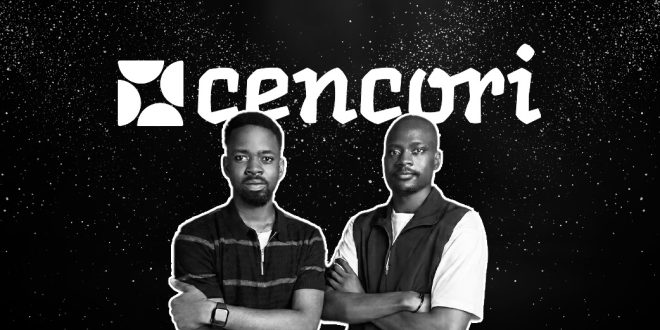
There is a particular kind of ambition that does not announce itself loudly. It begins as a private frustration, a technical itch, a question that refuses to leave the mind of a builder: why is this still so hard?
For Cencori Inc, that question became the beginning of a company.
At its core, Cencori is building AI cloud infrastructure for teams that want to run, secure, scale, observe, and monetize AI products without stitching together a fragile stack of disconnected tools. But the company’s story is not simply about infrastructure. It is about two founders looking at the future of artificial intelligence and deciding that Africa should not merely consume what others build. It should help define the foundations on which the next generation of intelligent systems will run.
For Bola, Cencori began from the vantage point of an engineer. Long before AI became the global obsession it is today, he was fascinated by the idea of intelligence itself. The sci-fi promise of machines that could reason, act, and assist had always held his attention. But when modern AI finally became accessible to developers, something became obvious: building useful AI products was still messy, risky, and unnecessarily difficult.
The models were powerful, yes. But the infrastructure around them was immature.
Developers had to worry about prompt injection, data leakage, provider downtime, cost spikes, unreliable responses, latency, observability, audit logs, deployment, memory, agent workflows, and monetization. They had to connect multiple services, manage failure points, protect sensitive data, and still somehow ship products fast enough to keep up with the speed of the market.
Bola did what many serious builders do: he tried to solve the problem for himself first.
He wanted a foundation that “just works” — a place where security, reliability, routing, memory, compute, deployment, and monetization could live together. Over time, that personal need became something larger. If he needed this kind of infrastructure, so would thousands of other developers and teams building in the AI era.
That was the seed of Cencori.
Daniel Oreofe joined the journey from a different but deeply complementary angle. His background cuts across infrastructure operations, product, customer success, partnerships, sales, and startup operations. He had worked across healthtech, fintech, crypto, and later encountered gaps in the civil engineering space that made him think more seriously about security, AI, and systems.
Where Bola brought deep technical intensity, Daniel brought the operational architecture needed to turn a technical idea into a company. He describes their partnership almost like a balance of forces: Bola as the deeply technical builder, himself as the operator helping shape product, culture, sales, structure, and growth.
The two had first connected through Twitter, where ideas turned into conversations, conversations turned into collaboration, and collaboration eventually became commitment. They had worked on projects together before Cencori became a formal partnership. Daniel saw not only Bola’s technical competence, but also the urgency, conviction, and clarity behind the vision.
In early-stage companies, belief is not decoration. It is fuel. Daniel saw that belief in Bola and decided that instead of building something adjacent from scratch, he would join the mission and help expand it.
Together, they began shaping Cencori into something more ambitious than a single product.
The simplest way to explain the platform is this: Cencori wants to be the control plane for building serious AI products. It gives developers and companies the infrastructure they need to build on a stronger foundation. Its AI Gateway provides a unified way to connect with major model providers while adding security, smart routing, observability, failover, and governance. Its broader vision extends into compute, persistent memory, agentic workflows, deployment, audit logs, and monetization.
For a developer, that means fewer headaches. For a startup, it means faster movement without sacrificing reliability. For an enterprise, it means the ability to build AI systems with better control over data, cost, compliance, and scale.
This distinction matters because Cencori is not trying to be another AI chatbot. It is not trying to sit at the application layer where users only see the interface. The company is building for the invisible layer underneath — the layer that determines whether an AI product can actually survive in production.
That has also made the company’s market education more difficult. Daniel is candid about this. When people hear “AI,” many immediately think of ChatGPT, Claude, or an LLM model. Selling infrastructure requires a different conversation. It means helping customers understand that the chat interface is only the visible tip of the system. Behind it are questions of security, routing, reliability, spend management, compliance, and operational resilience.
Once technical leaders understand that Cencori saves time, reduces cost, and removes complexity, the value becomes much clearer. But getting there requires education, patience, and trust.
That is why Cencori’s early growth has leaned heavily on educational content and community engagement. The company started bootstrapped, without investor funding, and had to be disciplined about solving real problems rather than chasing noise. For developer infrastructure, traditional marketing is rarely enough. Developers can see through empty claims. They respond to utility. They respond to clarity. They respond to tools that make their work better.
Cencori’s approach has been to show the mechanics of the problem plainly: what happens when providers fail, when costs spike, when data leaks, when AI products lack observability, when builders rely on fragmented systems. Then it positions itself not as hype, but as infrastructure.
The company’s public narrative has sometimes been compared to “Cloudflare for AI.” It is an understandable shorthand. Cloudflare became a defining layer for internet security and performance; Cencori wants to play a similar foundational role for AI-native products. But Daniel is careful about the comparison. Cencori does not want to live permanently under a borrowed identity. The deeper ambition is to become an anchor for the next era of intelligent systems.
That ambition is especially important because of where the company is building from.
For Daniel, building deep-tech infrastructure out of Nigeria sharpens the work. Constraints are not merely obstacles; they can become competitive advantages. When electricity, internet access, capital, and market understanding cannot be taken for granted, a team is forced to build leaner, more efficient, more resilient systems from day one.
Cencori’s founders are not thinking regionally. Their view is global. If a product works in Lagos, it should work in Ghana, the United States, or anywhere else with the same reliability and performance. The fact that the idea is being anchored from Africa does not make the ambition smaller. If anything, it makes the statement bigger.
Both founders believe Africa can contribute meaningfully to global AI infrastructure, but only if more builders move beyond wrapper applications and start building foundational systems. Daniel’s argument is direct: Africa has extraordinary engineering talent, much of it forged under difficult conditions. If that talent is given the right infrastructure and encouraged to build deeper systems, the continent can produce technology that competes globally.
Bola adds nuance to that position. Not every product built on top of existing models is simply a wrapper. A genuinely revolutionary idea can still use today’s models as part of its foundation. The question is whether builders have the right platform to take those ideas from experiment to production. Cencori wants to be that platform.
The timing, in their view, could not be better. AI is still early. The modern wave is only a few years old, and Africa’s adoption curve is even younger. Vibe-coded apps, agent-built software, autonomous workflows, AI-native enterprises, robotics, smart systems, and future intelligent products will need a place to live. They will need infrastructure designed specifically for the AI era, not traditional software infrastructure with AI added on top as an afterthought.
That is the future Cencori is preparing for.
Today, its most immediate customers are businesses and startups building AI products for real users, especially where sensitive data, reliability, and scale matter. At the same time, the platform leaves room for indie developers to experiment, learn, and build through free models, SDK access, and limited entry points. The company’s commercial motion may be business-to-business, but its cultural heartbeat remains close to developers.
The long-term vision is much larger.
Bola imagines Cencori as the default stack for anyone building AI products. If a founder wakes up with an idea for an intelligent system, Cencori should be the place they think to build it. If a lab wants to train models on African datasets, the infrastructure should be there. If builders move into robotics, drones, smart homes, or other hardware-driven intelligence, Bola sees a future where Cencori’s work could eventually extend even into intelligence-first chips.
Daniel frames the 10-year goal with equal clarity: Cencori should become the default runtime environment for intelligence systems globally. The first platform that comes to mind when teams want to build, secure, operate, and scale intelligent applications.
That is a bold ambition, but boldness is not unusual in founder stories. What makes Cencori’s story compelling is the seriousness underneath the ambition. The founders are not simply chasing the AI wave. They are trying to answer a deeper infrastructure question: where will the next decade of intelligent products actually run?
For now, Cencori is still early. It is still building, still educating the market, still refining its positioning, still earning trust one developer and one team at a time. But the company’s thesis is clear.
The AI era will not be shaped only by the models people use. It will also be shaped by the infrastructure that makes those models safe, reliable, observable, affordable, deployable, and useful in the real world.
Cencori wants to be that infrastructure.
And if its founders are right, one of the next important layers of global AI may not come from where the world expects. It may come from Africa, built by people who understand constraints deeply enough to turn them into strength.