 The Geek Circle The Voice of Africa’s Tech Community

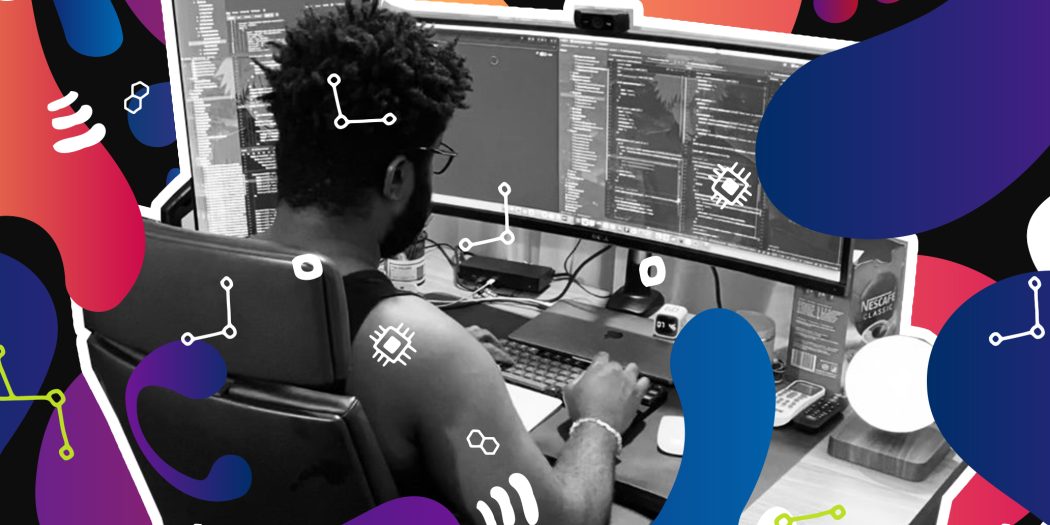
For as long as he could remember, computers had always fascinated Eric Aprioku. However, when his parents enrolled him in a computer school, it was as if his fingers were cursed. “I seemed to have an unrequited relationship with hardware because I spoiled every single system I tried to fix.”
He was close to giving up when he discovered Python and the world of coding. “I stumbled upon some guys writing code. I asked them what the hieroglyphics on their screen were, and they told me Python—a programming language used to build video games, and that was all I needed to hear.” Since then, he has learned other languages, become a senior full-stack software engineer, and founded Asyncpay, a payment orchestration platform.
A bumpy start to a successful career
His path to success wasn’t a straight one. At first, Eric found it hard to land his first gig. “Because I was always coding in my room, I didn’t have any industry experience, so people didn’t take me seriously.” It was when he realised that who you know is more important than what you know that the offers started rolling in. He sent his CV to different companies. He connected with decision-makers in person. He posted regularly on LinkedIn, sending connection requests to other devs. He told everyone he knew he could code. Eventually, he landed his first website project.
But Eric faced yet another challenge. Because he had zero backend development experience, he couldn’t figure out authentication and database management for the gig. He reached out to his network for help, and they directed him to Jevison Archibong, who would change his career trajectory forever. He broke down the concepts for Eric and, afterwards, took him on as a mentee. “He offered me an unofficial internship as his ‘Padawan’ to work with him and learn at the same time, and that was a very valuable period for my career.”
Apprenticing under Jevison convinced Eric that African local tech communities could do more for upcoming talent. That means moving beyond DM-style mentorship to actual apprenticeship-style programs and accountability programs. “A lot of local tech communities are great at hype, but not always great at follow-through. What we really need is more structure and consistency.”
Anyone who’s ever tried to integrate Paystack, Flutterwave, Stripe, or PayPal knows how messy it can get,” he says. “Different APIs, dashboards, and webhooks — it’s a huge headache.
The triumphs and pains of building in Africa
When he started writing Java in 2014, Eric never imagined he’d eventually found a startup. Asyncpay’s origin story is familiar; he set it up to solve a headache he experienced: the chaos of dealing with multiple payment gateways. “Instead of integrating and maintaining several apps—Paystack, Flutterwave, Stripe, and PayPal—with different APIs and webhooks, you plug into Asyncpay once.” Unifying 1,000 to 2,000 different gateways in a standardized system means less time wasted and less friction for devs using the solution.
Before founding Asyncpay, Eric built software for the American market. Building in Africa for Africans meant he had to take a different approach. “Understand the local market, but architect your solution in a way that it can travel.” For him, details like currency formatting or infrastructure limits are top of mind. But he keeps his codebase and roadmap flexible enough to adapt globally.
But building in Africa is not easy. Power cuts. Unreliable internet. Lack of access to tools and opportunities can slow founders. Building despite the challenges has taught Eric to be more resourceful and resilient than his peers in more developed regions.
While the abovementioned qualities are admirable, not every African founder wants to build under unfavourable conditions. “There’s also the mental load of trying to build a world-class level in an environment that doesn’t always support it,” Eric points out. Many choose to leave the continent. Eric doesn’t view the brain drain conversation as black and white. To him, talent will flock to greener pastures—areas with better pay, structure, and opportunities to grow. Instead of shaming anyone for leaving, he thinks those who remain should make staying or returning a viable option. “ The goal isn’t to stop people from leaving, it’s to build ecosystems strong enough that they’d want to come back or even return.”
Strong ecosystems are diverse and include everyone. Eric believes that while we’ve more awareness, more women in tech, more access to opportunities beyond major cities, there’s still work to be done. “We have to create environments that support women and underrepresented groups actively. The more people see others like themselves, the more likely they are to believe they belong there, too.”
The best time to start is today
Africa’s tech ecosystem may be rife with problems, but it’s also full of opportunities. Developers like Eric are venturing into the unknown to discover the goldmines that exist. “The ecosystem is raw but full of potential. If you can build something that works here, it can compete anywhere.”