 The Geek Circle The Voice of Africa’s Tech Community

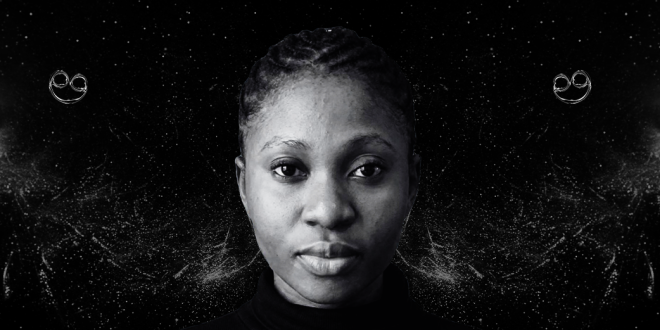
When Michelle Buchi Okonicha was little, she wanted to be the next Chimamanda. She dreamt about moving people through her writing. Today, she is an AI & Machine Learning Engineer, a Google Developer Expert, a Women Techmakers Ambassador, and the founder of Girls Like Me Dream Initiative, an initiative dedicated to ensuring that girls, regardless of background, can dream without limits. She is currently pursuing an MSc in Artificial Intelligence and Data Science at the University of Hull.
Here’s the story of how Michelle Buchi’s trajectory changed:
The interview that started everything
Michelle studied microbiology as her first degree and spent most of her university years knowing she wanted something else, without knowing what. “I wanted to do something more expressive, more fun, more complex, more brain-challenging,” she says.
After school, during her service year, she tried a brief stint with a tutor who was teaching a small group basic programming. It did not last because the tutor stopped showing up. It was only when she relocated to Lagos that technology came back into the picture, this time through a job application.
She applied for a software support role at a company in Lekki, with almost no technical knowledge to speak of. The application form asked candidates to list the programming languages they knew. She wrote one answer: HTML. She didn’t know then that HTML is not a programming language. She was the only non-computer science graduate in the room, and she did not expect to be selected. She was.
She then enrolled in the Zuri Training, a structured programme where she improved her technical skills. After completing the Zuri training, she joined the HNG Internship. “I would say that HNG has been very instrumental in my career,” she says. “I cannot talk about my tech journey without mentioning HNG.”
But it was also a hard time. She was commuting a long distance every day, leaving the house at 4:20 am, getting home at 10 pm, juggling deliverables at work and assignments at HNG simultaneously. “Sometimes I’m crying while working on tasks,” she says, describing that period without drama, just matter-of-factly. She finished anyway. She made it to the finals. “I just told myself, wow, you can actually do this.”
After HNG, the question of whether to pursue product management or software engineering resolved itself. The latter was the clear answer. She left her full-time job in November, picked up a technical writing role covering front-end libraries like React and Vue, then landed her first developer role. From there, the only way was up. She moved from front-end React work into VueJS and Laravel and then cloud infrastructure. Each role pulled her into a new territory, and she followed each thread to its end.
Today, alongside her engineering work, Michelle is an AI/ML Engineer and is pursuing an MSc at the University of Hull, building the theoretical foundation to match the practical experience she has spent years accumulating.
Showing up, writing it down
Michelle did not set out to build a public profile. When she began her first year as a developer, she started writing about what she was learning as she was building at work. It became a weekly ritual. She wrote because she enjoyed it. “It was never planned,” she says.
Articles she wrote casually, documenting problems she had solved at work, started accumulating readers she had never anticipated. One short piece about a 403 error she had encountered on an admin dashboard, written quickly after she fixed it, just to document the solution, went on to get 13,000 reads. She had not known how many other developers were experiencing the same issue until her inbox told her. “The visibility has helped me to understand impact more,” she says, “just knowing that more than 40,000 people have read my work.”
The writing opened doors in ways she had not anticipated. When she was selected for the Women Developer Academy and recognized as the first WTM High Impact Awardee for Sub-Saharan Africa in 2023, it was because of her impactful work with communities and the articles she had been putting out. “People see the things you do,” she says, “and just on the right day, the right moment.”
Community has been the other engine for career growth. Her first two jobs came through community channels, not formal applications. Job announcements were posted in groups, applied on the spot. “Community has been very, very instrumental in providing opportunities for me, in providing avenues for me to go, in giving me information on what materials to use, people to reach out to, places to go to,” she says. For anyone starting out, Michelle’s advice is to find your community. But not just that.
As AI reshapes what it means to work in tech, Michelle’s advice to upcoming developers is not to lean into the shift. “Be very open to learning,” she says. “If you’re resisting it instead of being open to it, you become jet-lagged.” Beyond that, you must learn the fundamentals. “Learn the foundations. They are even more necessary now because everybody can use AI. We just need to know who knows the core. The developers who will thrive, in her view, are not the ones who use AI the most. They are the ones who understand systems well enough to direct them.
Building Girls Like Me
Before Michelle was an engineer, before she was a Google Developer Expert or a Women Techmakers Ambassador, she was a girl who wrote a book. She was young, inspired by Barack Obama’s presidency, and she filled an exercise notebook with her thoughts on greatness. There was no one around to tell her what to do with it, and the notebook disappeared.
Years later, in Lagos, she watched a nine-year-old boy write a book and have it launched at a party. It made her realize that under a different set of circumstances, she could have been an author. “That was how I grew up. There was no propeller,” she says. “There was nobody to push me, to help me, to encourage me, to guide me, to tell me what to do, to even take me to somebody that can push this dream.”
Girls Like Me Dream Initiative was born from that gap in 2024. The mission is to ensure that girls, regardless of where they are coming from, can access the same opportunities as their counterparts, so that background does not determine the ceiling. Girls Like Me Dream has so far invested in 642 girls in Lagos and Asaba through school-led outreaches, mini-hackathons, affirmation cards, and one-on-one mentorships and AI trainings. In 2026, the initiative sponsored a girl who had been out of school for close to 2 years, covering everything she needed to return. At a recent outreach held in March, the team ran workshops teaching girls how to build IoT devices, covering digital skills, photography, social media, and mobile development with React Native. They also taught the girls how ATM cards are made, small details that open windows into a world that can otherwise feel inaccessible. “We try to bring them out, help them, encourage them, guide them,” Michelle says. “Provide the resources required for a certain journey.”
A team she has assembled and trusts runs the initiative, because she knows the importance of delegation. She handles about 20 percent of the day-to-day work herself so she can keep growing her career.
The hard thing worth doing
When it comes to inclusion, there are more women in African tech than there have ever been. Organisations like She Code Africa and Cyber Girls are doing real work. “There’s so much work going on currently for girls in the tech ecosystem,” Michelle says. She does not want more communities for women in tech.
What concerns her is a pattern of attrition. Start with twenty women learning software engineering. Before long, there are ten. Then five. Then fewer. Some move into product management or digital marketing, which are legitimate and valuable paths. But more women in Africa need to pursue the hard technical paths. “Girls in Africa should be more open to doing hard things, more hard things. Like just going all out, learning to the end, and giving their best.”
It’s demanding, but she’s an example of someone who has walked the path. She combined a draining Lagos commute with a full-time job and an intense internship, cried through it, and finished. She moved from frontend work into cloud infrastructure, then into machine learning, each time choosing depth over comfort. Her point is that the technical roles are worth it, and more women should give themselves the chance to find that out.
Building the future, not just working in it
When asked about the legacy she wants to leave, Michelle says she wants to build the future of technology. “I want to be amongst the people, the policy makers, at the core of it,” she says.
The vision she is building toward has two tracks that run in parallel. The first is the technology itself: impactful, intelligent systems that are useful to everyone and that open doors for more people, not fewer. The second is the people coming behind her, the women in Nigeria, across Africa, across the world, who need to see someone who looks like them doing the work at the highest level. “Every day I pray that my life is a testament to millions of women and people all over the world,” she says, “so that they can know and believe that everything is possible.”
The MSc she has started at the University of Hull is part of how she gets there. After years of building her technical depth through practice, she is now investing in the theoretical foundation to match.