 The Geek Circle The Voice of Africa’s Tech Community
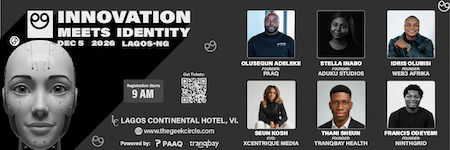
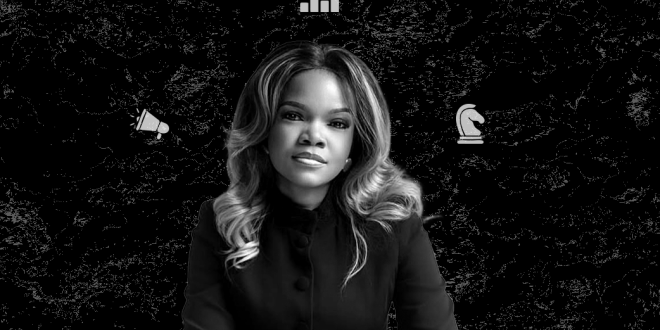
Most branding agencies will tell you they help companies grow. Seun Koshoedo, founder and Chief Visionary Officer of Xcentrique Media, says they do something deeper: they give brands a soul.
In a market where African companies are either chasing global trends or struggling to translate their identity into something customers actually connect with, her seven-year-old agency has carved out a distinctive lane, working with aspiring startups, legacy businesses, and everyone in between to help them find and tell their story in a way that lasts.
And it’s not all talk. So far, Seun has achieved an impressive $5 billion in revenue impact across 80+ projects in 15+ industries.
It all started with her mum’s library
Seun grew up in Lagos, raised by a single mother after losing her father at age five. Her mother, she says, was the defining force in shaping who she became, not through pressure exactly, but through access. “She single-handedly raised three girls and ensured that we had the best of everything to thrive,” Seun recalls.
Her mother had a full library at home and set a challenge for Seun to read during the holidays. Seun, being the kind of person who overdoes what she starts, got through twenty books in a single break just to get it done.
What the books built in her mind, her school helped her express. She joined debate competitions, a school radio programme, and a spot on a television show called African Child. By sixteen, she was already doing the thing she would eventually build a career around: communicating, in public, at scale, and doing it well.
The long road to a career in comms
Her mother, like many Nigerians of her generation, wanted Seun to study law. Seun didn’t get into the UniLag. The fallback, Babcock University, offered her English instead. “I can always pick up my dictionary and read,” she thought. That was a no.
In trying to secure her a spot at Babcock University, someone finally asked her the question no one had thought to ask before: what do you actually want to study? She said Mass Communication. Realising she’d struggle if she was forced to study a course she didn’t like, her family let her follow her heart.
When the time came to specialize, she decided to pursue PR and advertising. Her reasoning was practical: “For whatever I do, I’ll still need to advertise. I’ll still need to understand how to sell to people, how to communicate to people, and how to market to people. I needed to understand the science behind that.”
During an internship at Glasshouse Entertainment, her career took off in ways she never expected. She reported directly to the CEO, Ariyo Alabi, who was then about twenty-six years old and had built his own media business from scratch.. “That’s when entrepreneurship registered in my mind,” she says. But it was a specific task that crystallised what she wanted to do.
She was handed the social media accounts for Legendary, a TV show the company was producing, and told to grow the following from zero. She hit 500. Her target was doubled. She hit 5,000. It was doubled again. She hit 10,000. “At that point, I was so fulfilled, like fulfilled in ways that I cannot even describe.” That was the moment she understood what she was for.
The results had prospects banging down her door. People were approaching her to manage their brands on social media. She knew then she wanted to run her own company. But she decided to stay on at GlassHouse media, now Bedview Communications. She helped build the strategy and content for Green News, a subsidiary. Her time there taught her how to keep an organisation functioning, then she resigned and started Xcentrique Media.
Unexpected growing pains
Xcentrique’s clients came without much effort: referrals, word of mouth, trust built through the quality of her work. The problems were everywhere else.
“Everything that had to do with developing a strategy, implementing the strategy, everything from content to social media management, I understood. But there’s the need to understand that it takes more to run a business.”
When it came to negotiating fees, while larger agencies were charging a premium, Xcentrique Media was charging less than the minimum. “That’s how messed up I was where negotiation was concerned.” Managing and motivating a team was another challenge she worked through over time, often ending up doing client work herself because the systems to delegate it properly weren’t there yet.
What kept the business alive, she says, was adaptability. When something wasn’t working, they changed it fast. When a client needed something Xcentrique Media didn’t yet offer, they figured it out. “We started as hustlers and slowly started to introduce structure.” That is, in fact, a reasonable description of most small agencies that survive their first three years.
Waking the sleeping giants
The agency’s positioning today is built around two kinds of clients: aspiring giants and sleeping giants. Aspiring giants are startups, SMEs, high-growth companies still building their foundations. Sleeping giants are established businesses, some of them fifty or sixty years old, that have not kept pace with how fast the market has changed. For both, the question Xcentrique Media starts with is the same: what does this business actually need to grow?
That question often moves beyond marketing. Seun describes the work as a “deep handshake” with client businesses: understanding not just what they sell, but what their customers believe, fear, and aspire to. “We have to be very observant. The world is changing, people are changing, preferences are changing.” The insight she leans on is one that any effective marketer knows, but few apply consistently: people do not buy products, they buy versions of themselves. “We purchase things because we see an extension of ourselves in them.”
The practical implication is that good branding has to go beyond the visible. Logos, ads, and social content can create an impression, but the brand falls apart the moment the customer’s experience of the actual product or service contradicts it. Seun calls this finding the soul: the consistent, authentic core that holds up whether someone is engaging with a campaign or walking into a physical space. “If you disappear tomorrow, what is the market going to lose?”
Her two most cited examples illustrate the range. For a technology company that had been operating in Africa for over thirty-five years and was beginning to feel like a sleeping giant as fintechs crowded the market, Xcentrique Media led a full brand transformation: repositioning from a Nigerian story to a Pan-African one, updating brand collateral, identifying new channels, and creating a conference that brought key market segments into the same room to close deals indirectly.
How founders can position themselves to scale globally and locally
For young African founders, Seun‘s advice is less about execution and more about foundations. Be clear on your why first. Understand why you specifically are building this and who you are genuinely building it for. “Before we position ourselves, we need to be clear on our why.”
She uses Moniepoint as a reference point for the kind of patience this requires. The company started as a team app, moved to agency banking under the Moniepoint brand, expanded into retail payment solutions, and now holds a microfinance banking licence. None of it happened quickly. “They were the underdogs for a long time.” The clarity about the market they were serving, and the willingness to iterate rather than jump to scale, is what made the later growth possible. The lesson she draws is one of sequencing: understand your customer before you go to market, build and test with your first cohort before you try to go national, and invest in branding early rather than treating it as something to bolt on after the product finds traction.
Africa’s image problem is actually a brand problem
When Seun talks about the opportunity for African brands over the next decade, she does not start with technology. She starts with perception. “The world is trying to have some sort of association or affiliation with Africa. You can see it through Afrobeats. You can see it through fashion.” The demand is there. What is lagging, she argues, is supply. We need a coherent, confident African story being told by Africans.
The contrast she draws is between what is happening culturally and what still shows up when you search for images of Africa online. “It shows the impoverished side of Africa. It’s projecting Africa as hungry and starving.” The image does not match the reality of the people building and consuming within the continent. There’s an opportunity for African brands to step into that gap.
Defining the future of branding in Africa
She wants Xcentrique Media to be the first name that comes up whenever a brand is going through genuine transformation, whether that is a company entering Africa for the first time, an African brand launching into new markets, or a legacy business trying to come back after years of silence.
“When you say a brand has experienced true transformation, end to end, Xcentrique is that brand that played a role in making this happen,” she says. “That’s the positioning that we will achieve in the next couple of years.”
She also sees the agency evolving beyond its branding roots into something closer to a full transformation partner, one that diagnoses what a business truly needs to thrive and then helps build it.