 The Geek Circle The Voice of Africa’s Tech Community

Inside AIZIZA Design Studio’s ONE-TEN challenge, where fashion, music, and a willingness to experiment shaped three winning digital museums.
Sultan Aleje had three scrapped versions of his website before arriving at the entry that earned him third place in the ONE-TEN Web Design Challenge. Looking back, his advice was simple: “Just make it exist first, then perfect it later.”
That willingness to start, rethink and try again ran through a conversation with Sultan, fellow winners Karim Saab and Oreva Benedict Omanudhowho, and challenge creator Emmanuel Egbaidomeh, known as Aizi. Their finished work took different forms, but all three designers had been answering the same invitation: build a digital museum that made Nigeria’s creative history worth exploring.
Hosted by AIZIZA Design Studio, ONE-TEN asked participants to design and build a landing page for ARCHIVE, a fictional museum covering photography, music, fashion and design. They could choose one discipline or bring several together. There was no reference layout to reproduce. The visual identity, typography and interactions were theirs to decide.
The organisers reported more than 100 submissions from 42 countries, with entries reviewed by a six-member judging panel: Murphy Usifo; Obasola Akintola; Chukwu Adaeze Victoria; Carter Ogunsola; Emmanuel Egbaidomeh; and Bolutife Awakan.
Submissions underwent a rigorous evaluation process based on four core criteria: Design, Usability, Creativity, and Content. Judges assessed visual execution, responsiveness, accessibility, performance, originality, creative ingenuity, craftsmanship, and storytelling. The emphasis was on independent thinking and how effectively each participant interpreted the brief, rather than the complexity or number of pages built.
The three prizes totalled ₦1 million: ₦600,000 for Karim in first place, ₦300,000 for Benedict as first runner-up, and ₦100,000 for Sultan as second runner-up. For the people behind those entries, the result also offered something harder to put a figure on: a chance to see how far an idea could go when they gave it their full attention.
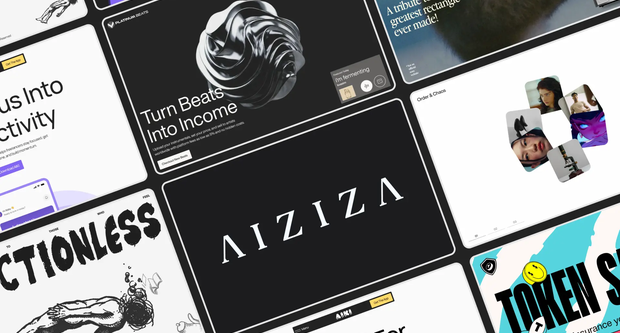
An opportunity Emmanuel wanted to pass on
Emmanuel Egbaidomeh knows what a creative opportunity can make possible. In the interview, he spoke about design helping him put himself through university and opening doors beyond his education. Some of the opportunities he valued most came from people willing to take a chance on him before he felt qualified.
ONE-TEN grew out of wanting to offer others that kind of opening. He wanted creatives to express themselves, show what they could do and potentially earn money from it. He also wanted them to have a break from familiar client instructions: make it pop, change the colour, do it this way.
“I wanted it to be about us,” Emmanuel said of the brief. If people around the world were going to enter, he wanted them to spend time learning about Nigeria. Its photography, clothes, music and visual culture offered more than enough material. The challenge was an invitation to look back, research carefully and find a point of view.
The idea had been with him since 2024. It finally moved forward in the early hours of October 1, 2026, during a conversation on X with Murphy Usifo, popularly known as Druids, a fellow sponsor. Emmanuel asked whether he would support a challenge; according to Emmanuel, Murphy offered to help bring the prize pool to ₦1 million.
What followed was a scramble to build the challenge website and get the word out. Volunteers contributed design work, and people shared the initiative with their communities. The official showcase credits AIZIZA and Murphy Usifo as sponsors. For Emmanuel, getting the challenge off the ground showed what could happen when he voiced an idea, and people chose to back it.
Karim Saab: choosing fashion, then going deeper
Karim’s first-place entry follows five fashion looks through different eras, beginning with Nigerian independence in 1960. He did not see the project as a contest between those looks. He was interested in what one generation leaves for the next to reinterpret.
He initially considered covering all four disciplines in the brief. Then he narrowed the scope. “When you do everything, you do nothing,” he said. Fashion gave him room to explore heritage and the craft of making clothes without stretching the experience across too many subjects.
Karim described an opening that moves from a globe into the Nigerian flag, placing the country at the centre of the experience. He also carried the flag’s visual rhythm into the way he arranged imagery. Those choices gave the project a direction before the technical work began.
His approach to AI followed the same order. Karim said he already knew how to design and code; while at university, he had studied websites by attempting to recreate them as a learning exercise. For this project, he described beginning with ideas and hand sketches, establishing fonts and a design system, and working in Figma before using AI to help with implementation.
“I consider AI not as a creative, but as a technical tool,” he said. He compared its role to an intern helping with coding while he directed details such as animation easing. The speed was useful, but he wanted the creative decisions to remain his.
Benedict: building a museum around the music he grew up with
Oreva Benedict Omanudhowho, known online as @notbypriest, approached ARCHIVE through sound. His music museum spans eight eras, with five songs at each stop. The period that meant the most to him was the 2000s, when he was born and whose music he grew up hearing.
As newer sounds emerged, he felt some of that music was slipping out of attention. He wanted visitors to return to it and feel the memories it could bring back. The selection was personal: these were sounds he wanted people to spend time with again.
Turning that feeling into an immersive museum meant dealing with a 3D environment, audio and performance. Benedict described coming into the challenge primarily as a brand designer. The work asked him to stretch beyond what he was used to making.
He made it manageable by dividing the build into smaller milestones. He worked through the audio, planned the museum’s route, gathered 3D assets and assembled the experience piece by piece. As it began to work, he refined the song choices, the distinctions between eras, and the instruments and artists represented in them.
The deadline was tight. An extension helped, and the process changed his sense of what he could attempt within a short period. Placing second gave him encouragement that the work was connecting with people. He described the recognition as a reason to keep developing his practice.
Sultan Aleje: making a digital product feel like a place
Sultan, known online as @UX__Hunter, brought the four disciplines together. His entry connects Ojeikere’s hairstyle photography, Nigerian records, Shade Thomas-Fahm’s fashion and Lemi Ghariokwu’s artwork. Within that broader collection, he gave particular attention to music.
He wanted someone scrolling through the museum to stop, choose a record and follow their curiosity. In the interview, he described connecting music selections to Apple Music and Spotify so visitors could continue listening on their phones. The museum could be a starting point for discovering something they wanted to keep.
The work required a different mindset. “I had to think more like an art director than a product designer,” Sultan said. Alongside interface decisions, he considered atmosphere, illustration, typography and cultural accuracy.
His three discarded versions were part of finding that direction. The result left him wanting to build more museum-style experiences. He also spoke about using the prize to replace placeholder imagery with real photography where it was available to purchase. What interested him now was how much a digital product could feel like an actual place.
What made the work stand out
For Emmanuel, a central question during judging was whether a designer had made deliberate choices. AI was permitted in the challenge, and he expected entrants to use it for research, references and technical assistance. What mattered to him was what they did with the output.
The judging criteria covered design, usability, creativity and content. An ambitious visual idea still needed to work on a phone. A technically accomplished site still needed something interesting to say. Emmanuel recalled submissions whose layouts fell apart on smaller screens and others that functioned well but offered little creative distinction.
Content was another dividing line. Trying to fit everything from the brief onto a page could leave an entry without a clear direction. The winning work, in his view, showed the value of choosing a theme and researching it deeply. That could mean Karim’s commitment to fashion, Benedict’s journey through music, or the attention Sultan gave to listening within his wider museum.
The three winners also described creativity as something they developed through practice. Karim encouraged designers to draw inspiration from different places, give ideas time and experiment with their own interpretation. Benedict came away with a broader sense of what he could build. Sultan’s advice began with getting an imperfect version into existence.
After the winners are announced
AIZIZA’s day-to-day work includes web design, development and branding. Through ONE-TEN, the studio created a space for designers to pursue an idea with fewer of the constraints of a client project. The outcome was a set of different interpretations of the same cultural material, alongside recognition and cash prizes for the strongest entries.
Emmanuel hopes the effect continues beyond the announcements. He wants people who encounter the work to reconsider what they could make and push their own skills further. He discussed a bigger future edition, although the possible ₦10 million prize pool mentioned in the interview remains an ambition rather than a confirmed commitment.
For now, the three winning museums offer places to begin: follow Karim through fashion, revisit the sounds Benedict grew up with, or linger over a record in Sultan’s collection. Each gives visitors a different route into Nigerian creative history. Behind each route is a designer who chose a direction, worked through the difficult parts and put something into the world.
Explore the winning work
First place – Karim Saab
https://archive-naija-style.netlify.app/
First runner-up – Oreva Benedict Omanudhowho
https://archive-ng.vercel.app/
Second runner-up – Sultan Aleje
https://archive-ivory-six.vercel.app/
Challenge and showcase: ONE-TEN Challenge
Host: AIZIZA Design Studio